
No claims are made that thiamine supplementation will cure, treat, prevent, or mitigate any disease or health condition. Results are not guaranteed and may vary. If you are experiencing health concerns, please seek professional medical advice promptly.
The information provided on this page, including any discussion of thiamine (vitamin B1), high-dose thiamine protocols, dosages or potential benefits, is for educational and informational purposes only. It is not intended as medical advice, diagnosis, or treatment. Thiamine supplementation, especially at high doses, should only be undertaken under the supervision and guidance of a qualified healthcare professional.
Individual responses to supplements can vary significantly, and high doses of any nutrient may carry risks or interact with medications or existing health conditions.
This website does not recommend, endorse, or prescribe any specific thiamine protocol or dosage.
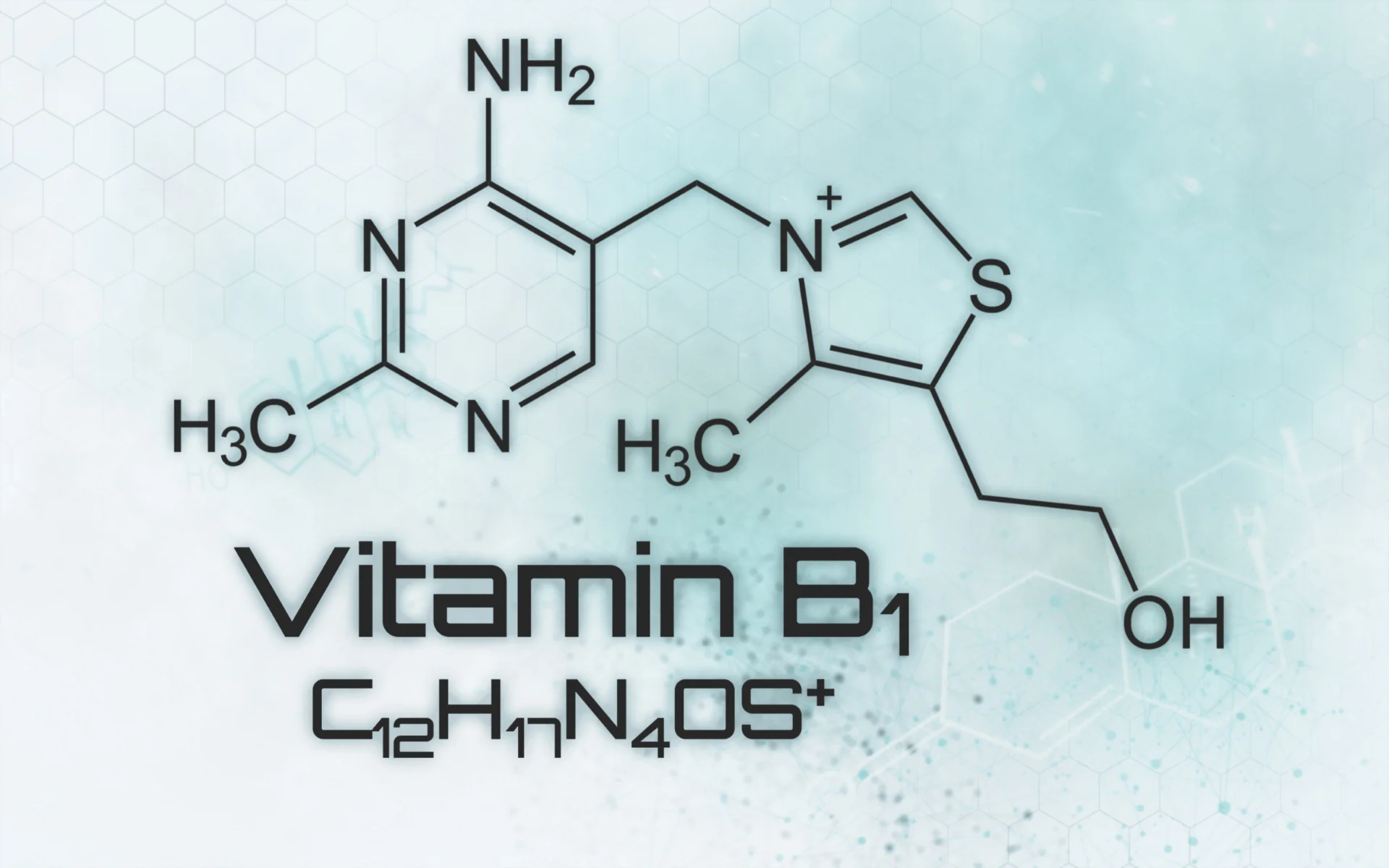
Your mitochondria need thiamine to convert fuel into ATP. This makes thiamine, also known as vitamin B1, so essential for energy production throughout your body. This might explain why both the scientific literature and anecdotal evidence have linked thiamine deficiency to many different (chronic) health conditions – a lack of thiamine can have cascading effects in all systems.
How do you make sure you get enough of this essential molecule? Below, we answer your questions about thiamine supplementation and the science behind it.
Thiamine is an essential nutrient that you obtain from food. It was the first vitamin to ever be discovered and isolated. Thiamine is water-soluble, meaning any excess thiamine is quickly excreted from the body. To maintain adequate levels, we must consume thiamine regularly through our diet.
Some researchers now believe a subclinical/mild deficiency among, for example, the U.S. population to be much more common than it was previously thought to be.
The amount of thiamine needed by the body is proportional to the intake of sugar/carbohydrate. This means that the “standard American diet” (rich in processed carbs) is a key risk factor for developing insufficient levels. [1]
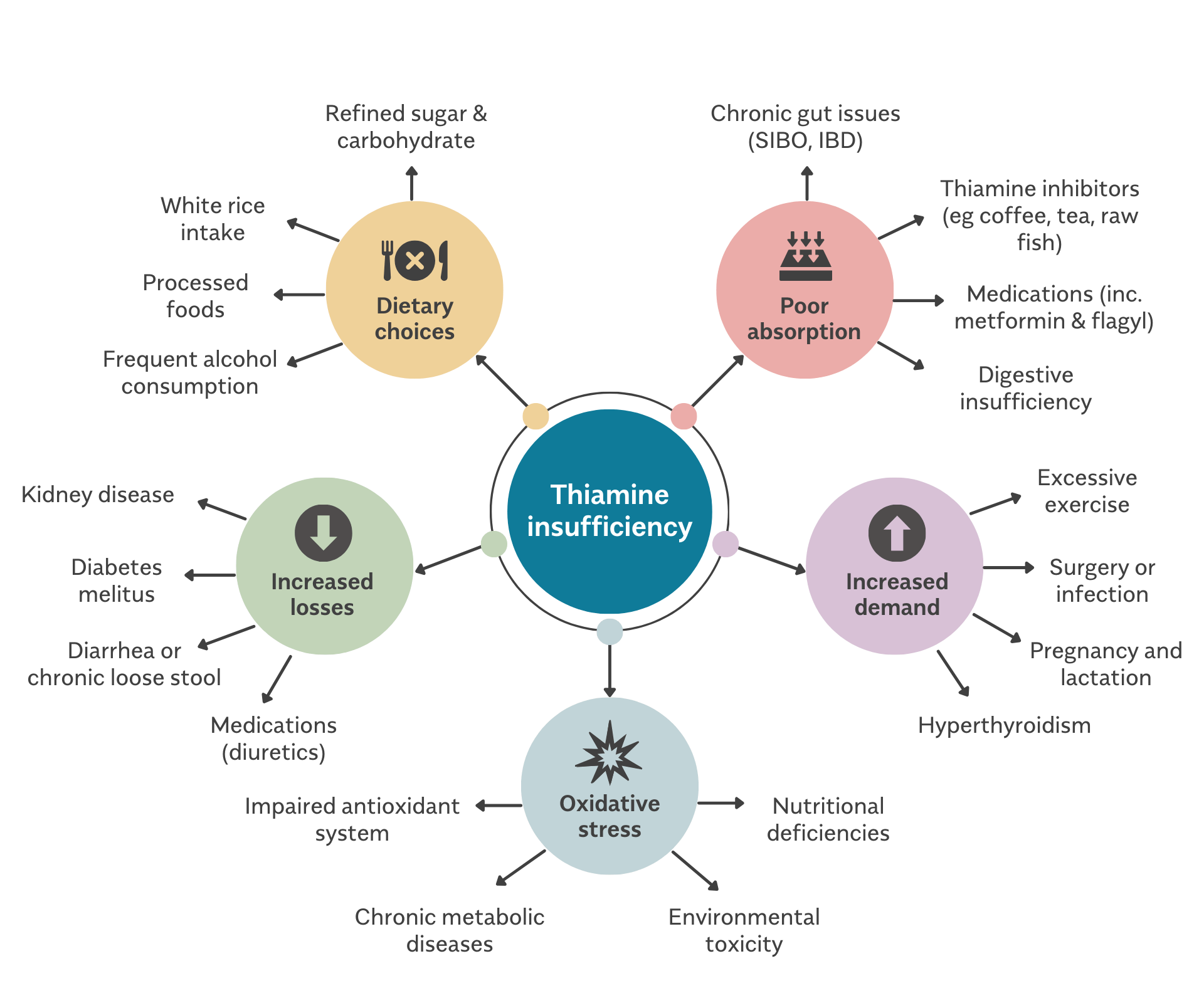
- A diet rich in refined sugar and processed carbohydrates
- Alcohol destroys thiamine and can reduce body stores over time.
- Tea and coffee contain tannins which inactivate thiamine in the gut.
- Thiamine can be depleted during chronic illness, intense physical demand, and infection.
- Animal foods: Pork is by far the richest source of thiamine, firstly in the lean meat and secondly in the organs. Thiamine is also found in moderate quantities in the organs of other animals, such as liver, kidney, heart, and brain.
- Grains and legumes: These contain less than high-tier animal foods like pork and organs. For example, pork contains approx. 0.8-1 mg per 100 g, whereas the highest of grains or legumes may contain 0.5 mg per 100 g. High tier foods include lentils, beans (navy, cannelini, pinto, black kidney, adsuki, butter), black-eyed peas, chia seeds, peanuts.
- Fruits and vegetables: These contain much less thiamine. For example, even the highest tier only provides around 0.1 mg per 100 g.
Thiamine: Crucial for Energy Metabolism
Thiamine is used by the body to perform many essential functions:
- Thiamine allows the body to process specific amino acids, and helps to maintain the antioxidant system.
- It plays a central role in how cells convert food (fats, proteins, and carbohydrates) into usable energy.
- Thiamine is especially important for processing glucose (sugar).
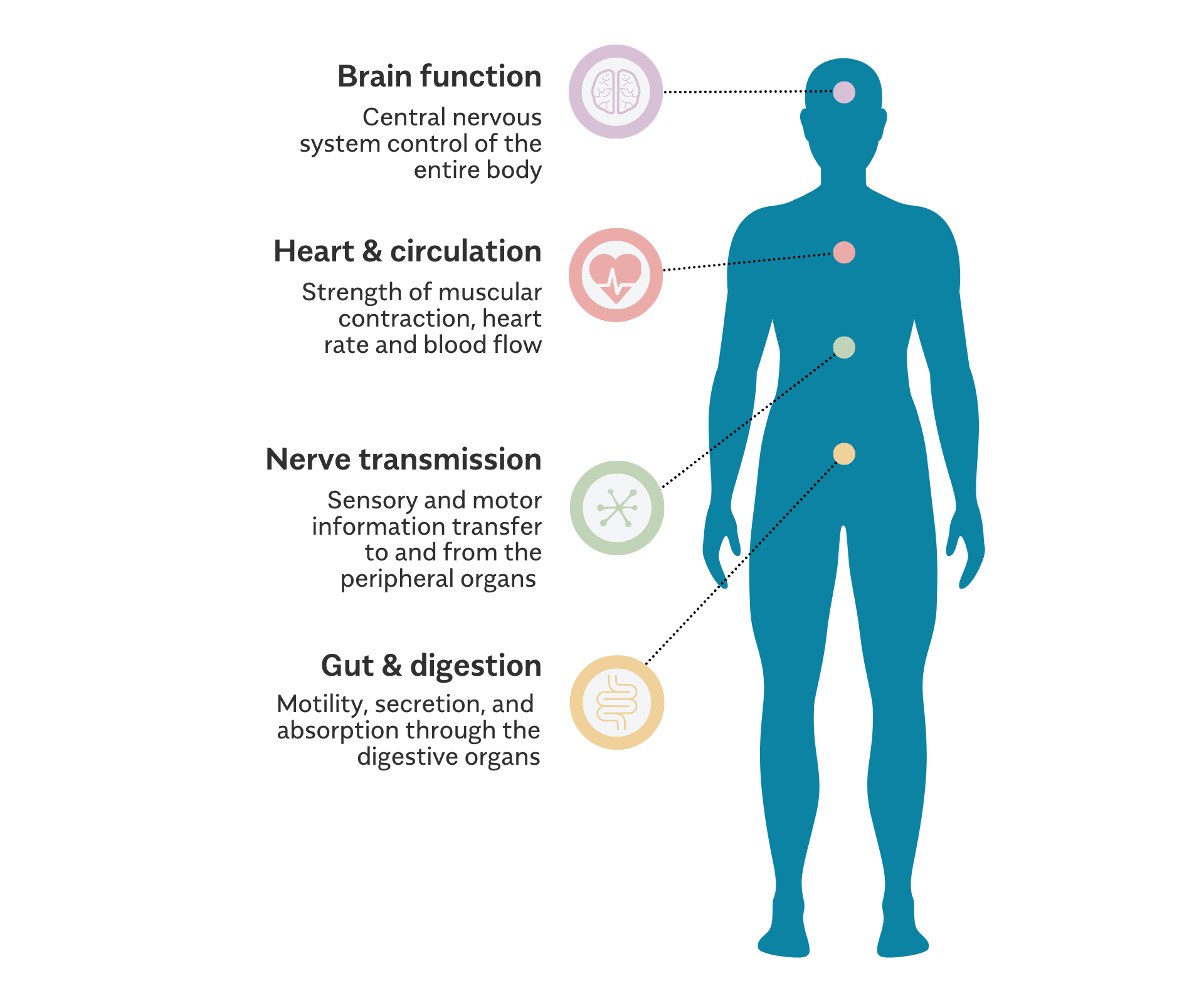
- It is involved in nerve transmission, maintaining balanced neurotransmitters in the brain, and the function of the nervous system.
Hence a lack of thiamine may be related to cognitive issues, chronic fatigue, and gut issues. Here’s an overview of its roles:
Deriving usable energy from dietary fats, carbohydrates, and amino acids involves a multitude of complex chemical reactions. Likewise, using dietary components to build and maintain our bodies also requires us to modify and process these molecules. To accomplish this we use enzymes, and for enzymes to function efficiently they often need cofactors in the form of vitamins and minerals.
Dietary thiamine performs this cofactor function, but first it must be processed and “activated” by phosphorylation inside cells to thiamine pyrophosphate and other phosphate esters. This activation is driven by the enzyme thiamine pyrophosphokinase, which in turn requires magnesium and ATP bound together as a complex. Other phosphate esters also include thiamine monophosphate and thiamine triphosphate.
Once activated, thiamine pyrophosphate may be used as a cofactor for a range of enzymes involved in energy metabolism. As the cofactor for an enzyme complex called pyruvate dehydrogenase, thiamine is essential for how the body derives energy from glucose in the Krebs cycle.
Another thiamine-dependent Krebs cycle enzyme complex is alpha-ketoglutarate dehydrogenase. Located in the mitochondria of the cell, this enzyme is involved in the processing of both glucose and fats for energy, as well as processing amino acids and neurotransmitters.
Insufficient thiamine can downregulate these enzymes [1b, 2] and therefore reduce the rate at which cells are able to synthesize energy. A more recent discovery has shown that thiamine is necessary for the alpha-oxidation of phytanic acid and 2-hydroxy straight-chain fatty acids, through the action of an enzyme called HACL-1 & 2 [3].
Dietary proteins are broken down into amino acids, and one class of amino acids is the branched-chain amino acids (valine, leucine, and isoleucine). The thiamine-dependent enzyme, branched-chain-keto acid dehydrogenase, is required to process and make use of these specific amino acids. In fact, without this enzyme the amino acids can accumulate at toxic levels, which is seen in the inherited genetic condition Maple syrup Urine Disease [4] .
Furthermore, utilizing glucose for anabolic (building) reactions in the pentose-phosphate pathway depends on the transketolase enzyme, which also requires both thiamine and magnesium cofactors. This pathway is needed to synthesize the building blocks of DNA, fatty acids, and in regenerating our primary intracellular antioxidant glutathione, amongst many other things. Without sufficient thiamine, the activity of transketolase is reduced and these crucial functions are downregulated [5].
The activity of other enzymes are also influenced by thiamine phosphate esters, where thiamine is not acting as a cofactor but is instead involved.
Symptoms of Thiamine Deficiency
Because thiamine is needed by every cell in the human body for the generation of ATP, a lack of thiamine could plausibly lead to any possible combination of symptoms in any organ.
The symptoms can be non-specific, difficult to pinpoint, and mimic other health conditions. Furthermore, they often appear in multiple systems of the body.
One example of this is fatigue, which either comes and goes, or is persistent. Another example might be unexplained muscle pain, mimicking a condition called fibromyalgia.
The most common deficiency drivers and symptoms are listed below:
Thiamine deficiency may be more persistent, and the necessary intake of thiamine much higher, than is often assumed to this day. As Chandler Marrs, PhD and Dr. Derrick Lonsdale put it:
“The RDA for thiamine is 1.1–1.2 mg for adult females and males, respectively. With an average diet, even a poor one, it is not difficult to meet that daily requirement, and yet, measurable thiamine deficiency has been observed across multiple patient populations with incidence rates ranging from 20% to over 90% depending upon the study. This suggests that the RDA requirement may be insufficient to meet the demands of modern living.”
Chandler Marrs, PhD and Dr. Derrick Lonsdale
For more background on thiamine deficiency, see the following science section or have a look at our Knowledge & Research overview.
Thiamine is especially important in the brain and central nervous system. Due to its role in the pentose phosphate pathway, it is expected that deficiency would result in decreased fatty acid synthesis required to maintain myelin sheath [8]. Indeed, demyelination of neurons is a known consequence of severe thiamine deficiency [9].
Thiamine is also required to maintain sufficient levels of the neurotransmitter acetylcholine in the brain [10, 11]. The balance between the excitatory and inhibitory neurotransmitters GABA and glutamate is governed partially by thiamine-dependent enzymes, and deficiency can induce neuroexcitotoxicity [12]. Some research indicates that different forms of thiamine also play non-cofactor roles such as maintaining neuronal ion channels [13] and facilitating synaptic release of neurotransmitters including dopamine [14].
Because of their high demand for energy, certain areas of the “lower” regions of the brain are particularly susceptible to thiamine deficiency. This includes the mamillary bodies, thalamus, hypothalamus, brain stem, and cerebellum [15]. Aside from many other functions, these regions are responsible for coordinating the activity of the autonomic nervous system. This system is tasked with controlling all of the involuntary bodily processes including blood pressure, heart rate, blood vessel dilation and constriction, body temperature, and digestion. When these brain regions lack thiamine, they can no longer generate energy efficiently. An energy deficit in these regions may therefore lead to a malfunctioning system [16]. The resulting autonomic dysfunction can have myriad downstream consequences on the other organs bodily systems – including the gastrointestinal and cardiovascular apparatus.
Which Form of Thiamine Works Best?
As we have seen, thiamine plays a key role in the body, ranging from the brain and nervous, cardiovascular and digestive systems to energy metabolism.
At the same time, our requirements for thiamine may be higher than often assumed, partly due to stressors like the modern diet or chronic health issues.
Many people therefore choose to supplement this essential nutrient. But supplements can contain different forms of thiamine, which can be confusing.
Here are the most common forms used in supplements (expand for details):
- Cheap, available, suited for people who react poorly to “stronger” forms
- Low absorption, no brain penetration, may be ineffective for tougher cases
- Bioavailable, anti-inflammatory, good for long-term use
- May not be well-suited for gut issues, may cause issues in salicylate-sensitive individuals
- Exceptionally high absorbtion, crosses into the nervous system rapidly (including the brain), direct effect on gut motility, antioxidant properties
- Extensively studied and used in Japan/the East
- May not be suitable for sulfur-sensitive people
Less common forms of thiamine found in supplements are:
- Crosses the blood-brain barrier easily, dopamine-enhancing, often noticeable effects within days
- Less widely available, contains sulfur (same caution as TTFD), can be too stimulating for sensitive individuals, some people develop tolerance with long-term use
- Suitable for highly sensitive people, suitable in IV contexts
- Poor absorption (similar to HCL), limited brain penetration, expensive
Each of these thiamine forms has its uses. While TTFD (such as found in Thiamax) and benfotiamine (such as found in Thiamega and ThiActive B) are the most bioavailable, sensitive individuals may need to start with a more basic, less bioavailable form such as HCL.
Clinical experience shows that some people may draw different benefits from each form, which may be related to their non-cofactor roles. This is why a supplement like Thiamega combines HCL, benfotiamine, TTFD, and sulbutiamine in one high-dose thiamine supplement.
Another aspect of different thiamine forms is the so-called pleiotropic effect: especially synthesized forms of thiamine can have effects on the body that go beyond serving as a precursor to thiamine’s primary coenzyme form. Hence it’s not just about bioavailability, but about different forms having different overall effects on various pathways and systems. This means that combining forms of thiamine can potentially harness their different positive pleiotropic effects.
The most common forms of thiamine found in nutritional supplements are thiamine salts (hydrochloride/HCL & mononitrate). However, the intestinal transport system is saturable, meaning that absorption/bioavailability hits a ceiling and is estimated to be low at approximately 3-10%. To achieve great increases in blood thiamine concentrations, high doses must be taken.
Furthermore, transport of free thiamine across the blood-brain barrier is thought to be a slow process [18], and so thiamine salts are unable to significantly increase thiamine levels in the brain as well as other formulations can.
Finally, the transport of thiamine into cells is dependent on membrane rate-limiting transport proteins which are also saturable. There are also a variety of genetic polymorphisms which may predispose to less efficient cellular absorption and utilization [19].
TTFD Thiamine: What Makes It Special
Thiamine tetrahydrofurfuryl disulfide (TTFD) is one of several thiamine derivatives originally synthesized and studied extensively in Japan.
Thiamine in its TTFD form is absorbed into the body at a much higher rate than ordinary thiamine, and has been widely used in the Japanese medical system since the 1960s.
TTFD is superior than other thiamine forms such as HCL because it can freely enter into cells without the requirement for a cell transporter. This rapidly increases the amount of thiamine available to a cell to use in energy metabolism. TTFD can also penetrate the blood-brain barrier, and is therefore useful for increasing thiamine levels in the brain.
Allithiamine is a naturally occurring form of thiamine found in garlic. When garlic is crushed or cut, an enzymatic reaction converts thiamine into allithiamine, which had been discovered in Japan in 1951. Allithiamine is named after the allium species (to which garlic belongs).
However, while effective, allithiamine tends to produce body odors, which is why Japanese scientists attached an organosulfur group (a mercaptan) to the chemical structure of the thiamine molecule, which created TTFD (tetrahydrofurfuryl disulfide). TTFD is also more stable, making it more suitable for supplements. This resolved the body odor issue and TTFD has been widely used in the Japanese medical system since the 1960s, and is increasingly gaining attention in the West for its high bioavailability. Confusingly, in the past some supplements were marketed as “allithiamine” when they actually contained TTFD.
Both benfotiamine and TTFD have their place: both forms are highly bioavailable.
Research suggests that TTFD crosses the blood-brain barrier and saturates brain cells with thiamine [24]. It penetrates the nervous system quickly. Experience in the field suggests it has unique effects on GI motility and stress tolerance. TTFD appears to work better for central nervous system problems. It may not be suitable for sulfur-sensitive people. TTFD has been widely used and extensively studied for its positive effects in Japan since the 1960s, and is only now getting more attention in the West.
Benfotiamine is very gentle for most people and good for long-term use. It may be less effective for gut issues than TTFD, and may cause issues in salicylate-sensitive individuals. However, it may exert positive effects on nerve cells and inflammatory pathways. In the Western medical world, benfotiamine has been used and studied more extensively than TTFD, whereas in the east, TTFD has a long tradition and a very substanstive amount of research behind it.
The most well-known proponent of TTFD is consultant paediatrician Dr. Derrick Lonsdale, who pioneered the use of this molecule in clinical practice [25]. Lonsdale obtained licences to study TTFD extensively over many years, and has since authored multiple books, articles, and academic research papers on this topic [26]. His most recent book, co-authored by Chandler Marrs PhD, is “Thiamine Deficiency Disease, Dysautonomia & High Calorie Malnutrition” and comes highly recommended for anyone seeking to learn more about thiamine deficiency and its importance in our modern world.
In recent years, clinical nutritionist Elliot Overton has worked with thousands of patients using a special and evolving thiamine protocol, relying heavily on TTFD. He has also published extensively on his research and clinical experience, including a peer-reviewed paper about thiamine and its biomolecular role.
TTFD is water-soluble, although due to its capacity to transit through the lipid bilayer of cell membranes it is often referred to as “lipid-soluble”. TTFD has been shown to increase organ thiamine content to a greater degree than thiamine salts [21], and may also possess antioxidant [22] & anti-inflammatory properties [23]. It has been shown to be non-toxic, even at high levels.
Furthermore, TTFD crosses the blood-brain-barrier and rapidly saturates brain cells with thiamine [24], which makes it a superior alternative to other forms of thiamine for restoring levels in the brain and central nervous system.
For an in-depth discussion of the science and clinical experience with thiamine, TTFD, and other forms, watch this interview of Elliot Overton by Dr. Michael Ruscio:
Thiamine Forms: Dosages & Bioavailability
Generally, any thiamine protocol starts with a low dose and gradually builds up the dose depending on individual needs.
For many people, starting with a single or half capsule of a highly bio-available TTFD or benfotiamine supplement (i.e. 50-100mg) per day should be fine. Sensitive individuals may need to start even lower (open the capsule, for example of Thiamax, and pour ¼ of the content into water) or even with a low-absorption form like HCL.
The difference in bioavailability has an impact on dosage. A brief overview:
| Thiamine Form | Absorption Estimate | Key Characteristics |
|---|---|---|
| Thiamine HCl / Mononitrate / Pyrophosphate | ~5–10% absorbed | Water-soluble; standard form with very low absorption. |
| Benfotiamine | 50-90% absorbed | Lipid-soluble; brain penetration |
| TTFD (Thiamine Tetrahydrofurfuryl Disulfide) | 50-90% absorbed | Sulfur-containing; lipid-soluble, brain penetration |
While the different absorption rates may give an indication, each type of thiamine supplement possesses unique qualities and affects cells in different ways. Therefore, there is no precise way to compare them in terms of dosage.
The way each thiamine form is processed depends on the individual. Even if absorbed at similar rates, these specialized forms are metabolised differently within the body. They may target different tissues or exert effects beyond simple thiamine repletion. Furthermore, individual response is highly variable.
For example: on a high-dose thiamine protocol, one person might require 600 mg of Benfotiamine, but find that 200 mg of TTFD achieves similar results. This inherent variability means that a direct milligram-to-milligram conversion is not accurate, nor useful.
The best way to find out is to try different forms and experiment.
Looking for an in-depth guide on the thiamine protocol? Check out Elliot’s online course.
The “Paradoxical Reaction”: Temporary Worsening of Symptoms
The “paradoxical reaction” is something that some people experience after beginning thiamine therapy, in which case their symptoms temporarily worsen: either pre-existing complaints increase in severity, or new symptoms can emerge.
- This does not occur for everyone, or even most people. The exact percentage of people who experience the paradoxical effect is unknown.
- Dr. Derrick Lonsdale found that it was more pronounced in people with severe, longstanding deficiency.
- The severity of the symptoms is generally dependent on the dose. Starting with a very high dose usually evokes a stronger reaction.
- The severity of the symptoms is also dependent on the form. Starting with a highly bioavailable form of thiamine can evoke a stronger reaction.
- It generally lasts for anywhere between a few days and a few weeks. It can be very mild for some, yet quite severe for others.
- In some people, these symptom changes occur each time the dose is increased. In others, it subsides after the first few weeks
Mitigating the paradoxical reaction involves starting with low dosages, pausing supplementation immediately if negative effects are observed, and taking the most important cofactors.
Cofactors To Be Taken Together With Thiamine
As thiamine levels increase and the cells start producing more energy, the body gets more “hungry” for other nutrients as well. To work best, and to mitigate any imbalances, thiamine therefore needs certain cofactors. A basic thiamine protocol includes:
- Thiamine supplement: Your chosen form (such as TTFD, benfotiamine, or HCL)
- B-Complex: A comprehensive B-complex vitamin supplement (such as ThiActive B)
- Magnesium (200–400 mg/day): Any form including taurate, glycinate, malate, or citrate (avoid citrate if experiencing loose stool)
- Potassium (optional, but recommended): While not always necessary, potassium can be an important addition for those with certain underlying conditions or electrolyte imbalances
If you want an easy and effective solution, the Complete Thiamine Protocol combines the Thiamax thiamine TTFD formulation with a B-Complex specifically formulated as a cofactor, as well as a special minerals formula that contains magnesium, potassium and more.
For a high-dose protocol or for deriving benefits from multiple forms of thiamine, you can opt for the Mega Dose Thiamine Protocol, which combines the same cofactors with the multi-thiamine supplement Thiamega.
B Vitamin cofactors
- The B vitamins work together as a team
- High doses of one isolated vitamin can increase the demand for other vitamins
- The B complex is therefore essential to meet that extra demand
Magnesium
- High-dose thiamine may increase your body’s demand for magnesium
- Magnesium is required to activate thiamine and for enzymes that use it
- If you’re low in magnesium, thiamine can’t work properly
Potassium
- Some people may need higher potassium intake to support these processes and avoid deficiency symptoms
For an overview of our thiamine supplements, see the Product Guide.
References
1. Lonsdale D. The Role of Thiamin in High Calorie Malnutrition [Internet]. 2015 [cited 2020 Apr 15]. Available from: https://www.semanticscholar.org/paper/The-Role-of-Thiamin-in-High-Calorie-Malnutrition-Lonsdale/8997c5dc5ba0e0433c04b055c5d55befdc1a8d51
1b. Pekovich SR, Martin PR, Singleton CK. Thiamine Deficiency Decreases Steady-State Transketolase and Pyruvate Dehydrogenase but not α-Ketoglutarate Dehydrogenase mRNA Levels in Three Human Cell Types. The Journal of Nutrition [Internet]. 1998 Apr [cited 2020 Apr 15];128(4):683–7. Available from: https://academic.oup.com/jn/article/128/4/683/4728869
2. SHI Q, KARUPPAGOUNDER S, XU H, PECHMAN D, CHEN H, GIBSON G. Responses of the mitochondrial alpha-ketoglutarate dehydrogenase complex to thiamine deficiency may contribute to regional selective vulnerability. Neurochemistry International [Internet]. 2007 Jun [cited 2020 Apr 15];50(7–8):921–31. Available from: https://www.ncbi.nlm.nih.gov/pmc/articles/PMC2753422
3. Casteels M, Sniekers M, Fraccascia P, Mannaerts GP, Van Veldhoven PP. The role of 2-hydroxyacyl-CoA lyase, a thiamin pyrophosphate-dependent enzyme, in the peroxisomal metabolism of 3-methyl-branched fatty acids and 2-hydroxy straight-chain fatty acids. Biochemical Society Transactions [Internet]. 2007 Oct 25 [cited 2020 Apr 15];35(5):876–80. Available from: https://pubmed.ncbi.nlm.nih.gov/17956236
4. Elsas LJ, Danner DJ. THE ROLE OF THIAMIN IN MAPLE SYRUP URINE DISEASE. Annals of the New York Academy of Sciences [Internet]. 1982 Mar [cited 2020 Apr 15];378(1 Thiamin):404–21. Available from: https://nyaspubs.onlinelibrary.wiley.com/doi/abs/10.1111/j.1749-6632.1982.tb31214.x
5. Fattal-Valevski A. Thiamine (Vitamin B1). Journal of Evidence-Based Complementary & Alternative Medicine. 2011 Jan;16(1):12–20.
6. Mkrtchyan G, Aleshin V, Parkhomenko Y, Kaehne T, Luigi Di Salvo M, Parroni A, et al. Molecular mechanisms of the non-coenzyme action of thiamin in brain: biochemical, structural and pathway analysis. Scientific Reports [Internet]. 2015 Jul 27 [cited 2020 Apr 15];5(1). Available from: https://www.ncbi.nlm.nih.gov/pmc/articles/PMC4515825
7. Matthews CC, Zielke HR, Wollack JB, Fishman PS. Enzymatic Degradation Protects Neurons from Glutamate Excitotoxicity. Journal of Neurochemistry [Internet]. 2002 Jan 4 [cited 2020 Apr 15];75(3):1045–52. Available from: https://pubmed.ncbi.nlm.nih.gov/10936185
8. Dhir S, Tarasenko M, Napoli E, Giulivi C. Neurological, Psychiatric, and Biochemical Aspects of Thiamine Deficiency in Children and Adults. Frontiers in Psychiatry [Internet]. 2019 Apr 4 [cited 2020 Apr 15];10. Available from: https://www.frontiersin.org/articles/10.3389/fpsyt.2019.00207/full
9. Shible AA, Ramadurai D, Gergen D, Reynolds PM. Dry Beriberi Due to Thiamine Deficiency Associated with Peripheral Neuropathy and Wernicke’s Encephalopathy Mimicking Guillain-Barré syndrome: A Case Report and Review of the Literature. American Journal of Case Reports [Internet]. 2019 Mar 13 [cited 2020 Apr 15];20:330–4. Available from: https://www.ncbi.nlm.nih.gov/pmc/articles/PMC6429982
10. Jankowska-Kulawy A, Bielarczyk H, Pawełczyk T, Wróblewska M, Szutowicz A. Acetyl-CoA and acetylcholine metabolism in nerve terminal compartment of thiamine deficient rat brain. Journal of Neurochemistry [Internet]. 2010 Aug 25 [cited 2020 Apr 15];115(2):333–42. Available from: https://onlinelibrary.wiley.com/doi/full/10.1111/j.1471-4159.2010.06919.x
11. Nardone R, Höller Y, Storti M, Christova M, Tezzon F, Golaszewski S, et al. Thiamine Deficiency Induced Neurochemical, Neuroanatomical, and Neuropsychological Alterations: A Reappraisal. The Scientific World Journal [Internet]. 2013 [cited 2020 Apr 15];2013:1–8. Available from: https://www.hindawi.com/journals/tswj/2013/309143
12. Hazell AS, Butterworth RF, Hakim AM. Cerebral Vulnerability Is Associated with Selective Increase in Extracellular Glutamate Concentration in Experimental Thiamine Deficiency. Journal of Neurochemistry [Internet]. 1993 Sep [cited 2020 Apr 15];61(3):1155–8. Available from: https://onlinelibrary.wiley.com/doi/abs/10.1111/j.1471-4159.1993.tb03635.x
13. Bettendorff L. A non-cofactor role of thiamine derivatives in excitable cells? Archives of Physiology and Biochemistry [Internet]. 1996 Jan [cited 2020 Apr 15];104(6):745–51. Available from: https://pubmed.ncbi.nlm.nih.gov/8980789
14. Yamashita H, Zhang Y-X, Nakamura S. The effects of thiamin and its phosphate esters on dopamine release in the rat striatum. Neuroscience Letters [Internet]. 1993 Aug [cited 2020 Apr 15];158(2):229–31. Available from: https://pubmed.ncbi.nlm.nih.gov/8233101
15. Martin PR, Singleton CK, Hiller–Sturmhöfel S. The Role of Thiamine Deficiency in Alcoholic Brain Disease [Internet]. National Institute on Alcohol Abuse and Alcoholism. 2003 [cited 2020 Apr 15]. Available from: https://pubs.niaaa.nih.gov/publications/arh27-2/134-142.htm
16. Lonsdale D. Dysautonomia, a Heuristic Approach to a Revised Model for Etiology of Disease. Evidence-Based Complementary and Alternative Medicine [Internet]. 2009 [cited 2020 Apr 15];6(1):3–10. Available from: https://www.ncbi.nlm.nih.gov/pmc/articles/PMC2644268
17. Lonsdale D. The Role of Thiamin in High Calorie Malnutrition [Internet]. 2015 [cited 2020 Apr 15]. Available from: https://www.semanticscholar.org/paper/The-Role-of-Thiamin-in-High-Calorie-Malnutrition-Lonsdale/8997c5dc5ba0e0433c04b055c5d55befdc1a8d51
18. Lockman PR, Mumper RJ, Allen DD. Evaluation of blood-brain barrier thiamine efflux using the in situ rat brain perfusion method. Journal of Neurochemistry [Internet]. 2003 Jul 4 [cited 2020 Apr 16];86(3):627–34. Available from: https://onlinelibrary.wiley.com/doi/10.1046/j.1471-4159.2003.01888.x
19. Brown G. Defects of thiamine transport and metabolism. Journal of Inherited Metabolic Disease [Internet]. 2014 May 1 [cited 2020 Apr 16];37(4):577–85. Available from: https://onlinelibrary.wiley.com/doi/abs/10.1007/s10545-014-9712-9
20. Park W-S, Lee J, Hong T, Park G, Youn S, Seo Y, et al. Comparative Pharmacokinetic Analysis of Thiamine and Its Phosphorylated Metabolites Administered as Multivitamin Preparations. Clinical Therapeutics [Internet]. 2016 Oct [cited 2020 Apr 16];38(10):2277–85. Available from: https://pubmed.ncbi.nlm.nih.gov/27707509
21. Nozaki S, Mizuma H, Tanaka M, Jin G, Tahara T, Mizuno K, et al. Thiamine tetrahydrofurfuryl disulfide improves energy metabolism and physical performance during physical-fatigue loading in rats. Nutrition Research [Internet]. 2009 Dec [cited 2020 Apr 16];29(12):867–72. Available from: https://pubmed.ncbi.nlm.nih.gov/19963160
22. Huang W-C, Huang H-Y, Hsu Y-J, Su W-H, Shen S-Y, Lee M-C, et al. The Effects of Thiamine Tetrahydrofurfuryl Disulfide on Physiological Adaption and Exercise Performance Improvement. Nutrients [Internet]. 2018 Jun 29 [cited 2020 Apr 16];10(7):851. Available from: https://www.ncbi.nlm.nih.gov/pmc/articles/PMC6073388
23. MATSUI K, NAKAHARA H, WATANABE H, TAMATSU H, NAKAZAWA M, NAKAGAWA Y, et al. Inhibition by thiamine tetrahydrofurfuryl disulfide (TTFD) of the arachidonic acid cascade-line activation as evidenced in the heart-lung preparation of the dog. The Japanese Journal of Pharmacology [Internet]. 1985 [cited 2020 Apr 16];39(3):375–9. Available from: https://www.sciencedirect.com/science/article/pii/S0021519819522259
24. Hills JI, Golub MS, Bettendorff L, Keen CL. The effect of thiamin tetrahydrofurfuryl disulfide on behavior of juvenile DBA/2J mice. Neurotoxicology and Teratology [Internet]. 2012 Mar [cited 2020 Apr 16];34(2):242–52. Available from: https://pubmed.ncbi.nlm.nih.gov/21816221
25. Lonsdale D. Thiamine tetrahydrofurfuryl disulfide: A little known therapeutic agent [Internet]. ResearchGate. unknown; 2004 [cited 2020 Apr 16]. Available from: https://www.researchgate.net/publication/8382703_Thiamine_tetrahydrofurfuryl_disulfide_A_little_known_therapeutic_agent
26. Lonsdale D. Publications [Internet]. ResearchGate. ResearchGate; 2020 [cited 2020 Apr 16]. Available from: https://www.researchgate.net/profile/Derrick_Lonsdale2
